Saturday, April 12, 2014


Thursday, April 10, 2014
ACA/Obamacare: Kathleen Sebelius Resigns.

The officials said President Barack Obama on Friday will nominate Sylvia Mathews Burwell, currently director of the White House Office and Management and Budget, to succeed Sebelius, 65, the former governor of Kansas, who was an original member of the Cabinet that Obama appointed when he took office in January 2009.” - Kathleen Sebelius Resigning as Health Secretary, NBC, 04/10/2014
Link to the entire article appears below:
http://www.nbcnews.com/news/us-news/kathleen-sebelius-resigning-health-secretary-n77341
Friday, February 21, 2014
ACA: The Shrinking-Shrinking Sign Up Projection

"I think success looks like at least 7 million people having signed up by the end of March 2014,"Sebelius said during an interview with NBC News.
The White House has been slowly backing away from that number as health exchanges around the country continue to fail and as few people show interest in the program. Now, Vice President Joe Biden is admitting the White House probably won't be meeting its goal of 7 million people enrolled by March.’
‘"We may not get to seven million, we may get to five or six, but that's a hell of a start," Biden said, according to a pool report of his meeting.
The Obama administration said last week that 3.3 million people have enrolled in private Obamacare health plans between October 1 and Feb 1.’
‘Keep in mind the definition of enrolled is a broad one. The federal government counts people putting Obamacare plans in their online shopping carts as "enrolled" before they pay for the plan or check out.’ - Biden: That 7 Million Obamacare Enrollee Goal is Probably Not Going to Happen, townhall.com, 02/20/2014 and Biden: 'We may not get to 7 million' by Obamacare deadline, Reuters, 02/19/2014
Link to the complete articles appear below:
http://townhall.com/tipsheet/katiepavlich/2014/02/20/biden-that-7-million-obamacare-enrollee-goal-is-probably-not-going-to-happen-n1797884?utm_source=thdailypm&utm_medium=email&utm_campaign=nl_pm
http://www.reuters.com/article/2014/02/20/us-usa-healthcare-biden-idUSBREA1J02N20140220
Wednesday, October 9, 2013
Jon Stewart Interviews Kathleen Sebelius about Obamacare: “well, maybe she’s just lying to me.”

"Health and Human Services Secretary Kathleen Sebelius likely thought her interview with Jon Stewart on “The Daily Show” Monday night would be an easy setting to pitch the Obamacare exchanges to young people. Instead, she ended up getting accused of being a liar by the popular comedy host.
During his interview with Sebelius, Stewart repeatedly sought an answer from the secretary on why big businesses got a delay in their Obamacare mandate to provide affordable health insurance to their employees, while individuals did not get a delay in their Obamacare mandate making them purchase health care or face a penalty.
In a rare monologue at the end of the show, Stewart said he remained confused and that he suspected that the secretary may have been lying to him." - Jon Stewart accuses Kathleen Sebelius of lying to him about Obamacare, The Daily Caller, 10/08/2013
Link to the entire article appears below:
http://dailycaller.com/2013/10/08/jon-stewart-accuses-kathleen-sebelius-of-lying-to-him-about-obamacare/
Thursday, August 22, 2013
Obamacare and the “Navigator”: The Scilly Naval Disaster of 1707 at $20 an Hour?

The Health and Human Services Department (HHS) announced $67 million in funding for “navigators,” which are people and community groups who will help people make sense of their options under the healthcare law.
HHS had initially said navigators would receive $54 million in grants, but officials said they pulled an extra $13 million from the healthcare law’s prevention fund to help broaden the reach of the program.
“Navigators will be among the many resources available to help consumers understand their coverage options in the marketplace,” HHS Secretary Kathleen Sebelius said in a press release. “A network of volunteers on the ground in every state — health care providers, business leaders, faith leaders, community groups, advocates, and local elected officials — can help spread the word and encourage their neighbors to get enrolled.”
All told, more than 100 organizations in 34 states received grants on Thursday.
The list of navigators includes a host of healthcare networks and universities, which will add ObamaCare education to existing programs that offer healthcare counseling to low-income families.
Some community organizations will use the money to print brochures and organize informational forums. Other recipients will promote enrollment through food banks and religious centers.” - Officials add millions of dollars to ObamaCare enrollment drive, the hill.com, 08/15/2013
Link to the entire article appears below:
http://thehill.com/blogs/healthwatch/health-reform-implementation/317301-hhs-redirects-millions-of-dollars-to-obamacare-enrollment-drive
Note: what exactly is a “navigator“?
“Tens of thousands of health care professionals, union workers and community activists hired as "navigators" to help Americans choose Obamacare options starting Oct. 1 could earn $20 an hour or more, according to new regulations issued Wednesday.
The 63-page rule covering navigators, drawn up by the Centers for Medicare & Medicaid Services, also said the government will provide free translators for those not fluent in English -- no matter what their native language is.
"The proposed requirements would also include that such entities and individuals provide consumers with information and assistance in the consumer's preferred language, at no cost to the consumer, which would include oral interpretation of non-English languages and the translation of written documents in non-English languages when necessary to ensure meaningful access," said the regulations.
The rules also addressed conflict of interest and other potential issues that navigators could face as the public's first stop on the Obamacare trail.
It is still not clear how many navigators will be required. California, however, provides a hint. It wants 21,000.
That could be an expensive proposition. The proposed rules, now open for public comment, suggest an estimated pay of $20-$48 an hour.” - Tens of thousands Obamacare 'navigators' to be hired, Washington Examiner, 04/03/2013
Link to the entire article appears below:
http://washingtonexaminer.com/tens-of-thousands-obamacare-navigators-to-be-hired/article/2526167
Wednesday, August 7, 2013
Opening An Obamacare Account

Just eight weeks before the Oct. 1 launch of open enrollment under President Barack Obama's health care overhaul law, administration officials announced Monday that the Affordable Care Act is a step closer to reality for millions of uninsured Americans.
Health and Human Services Secretary Kathleen Sebelius said consumers can now go online to healthcare.gov and create personal accounts by establishing a username and password.
However, serious shopping will have to wait until sometime in September, when details on insurance plans and premiums offered in local areas will become available through the new online marketplace.
While Monday's announcement may sound like partial progress only, Sebelius quickly moved to put the law's doubters on notice. "Let me be clear," she said. "We are on target and ready to flip the switch on Oct. 1."
The congressional Government Accountability Office and Treasury's inspector general for the Internal Revenue Service have been among the nonpartisan oversight organizations warning of possible delays with the rollout of the law.
The new personal account feature unveiled Monday will be available just in English for the time being. HHS said personal accounts will be coming soon to the Spanish-language marketplace, at cuidadodesalud.gov.” - Personal 'Obamacare' accounts debut, AP, 08/05/2013
Link to the entire article appears below:
http://news.yahoo.com/personal-obamacare-accounts-debut-203022593.html
Saturday, June 29, 2013
Kathleen Sebelius rules against the church: Kathleen said from on high, let there be "free" contraceptive, and then there was contraceptive

"[Friday's] announcement reinforces our commitment to respect the concerns of houses of worship and other nonprofit religious organizations that object to contraceptive coverage, while helping to ensure that women get the care they need, regardless of where they work," said Health and Human Services Secretary Kathleen Sebelius.
Early last year, the Obama administration said that universities, hospitals, and other employers with a religious affiliation could avoid paying directly for contraceptives.
Under that Obamacare arrangement, insurance companies would instead provide coverage and pay for it.
The rule requires an institution's health insurer or third-party insurance administrator to notify employees about birth control benefits and provide beneficiaries with direct payments that cover the cost of contraceptive services.
The announcement by Sebelius puts into effect a requirement that has been beset by more than a year of talks between administration officials and religious employers.
The U.S. Conference of Catholic Bishops and other denominations oppose contraception on religious grounds and have protested against the requirement, along with conservatives.
"We have received and started to review the 110-page final rule," New York Cardinal Timothy Dolan, the conference’s president, said in a statement. "It will require more careful analysis. We will provide a fuller statement when that analysis is complete." ' - Obamacare Ruling: Religious Employers Must Provide Birth Control Coverage, Newsmax, 06/28/2013
Link to the entire article appears below:
http://www.newsmax.com/Headline/obamacare-insurance-coverage-birth/2013/06/28/id/512562?s=al&promo_code=14029-1
Thursday, June 13, 2013
From the Department of You Can’t Make this Stuff Up: Sebelius “May as well drop out” [in 3rd grade].

http://cnsnews.com/news/article/sebelius-kids-so-far-behind-3rd-grade-may-well-drop-out
Tuesday, June 11, 2013
Possible Government Employee Insider Trading Regarding Grandma’s Health Insurance? No way! Way!

The surge of trading in Humana’s and other private health insurers’ stock before the April 1 announcement already has prompted the Justice Department and the Securities and Exchange Commission to investigate whether Wall Street investors had advance access to inside information about the then-confidential Medicare funding plan.
Sen. Charles E. Grassley (R-Iowa) told The Washington Post late last week that his office reviewed the e-mail records of employees at the Department of Health and Human Services and found that 436 of them had early access to the Medicare decision as much as two weeks before it was made public.
The number of federal employees with advance knowledge is surely higher; the figures Grassley’s staff compiled did not include people at the White House’s Office of Management and Budget who also saw the information. The e-mail records of those employees have not been made available to Grassley.
The discovery that sensitive information was so widely disseminated could complicate the forensic task for investigators trying to determine who may have leaked confidential information, and it brings further attention to the government’s handling of policy details valued by Wall Street traders.” - Hundreds in government had advance word of Medicare action at heart of trading-spike probe, Washington Post, 06/09/2013
Link to the entire article appears below:
http://www.washingtonpost.com/politics/hundreds-in-government-had-advance-word-of-medicare-action-at-heart-of-trading-spike-probe/2013/06/09/044944d0-cec7-11e2-8845-d970ccb04497_story.html
Sunday, April 7, 2013
Obamacare: actuaries, insurance policies, maintenance policies and Kathleen Sebelius

“Kristi Bohn, an actuary who worked on the study, acknowledged it did not attempt to estimate the effect of subsidies, insurer competition and other factors that could mitigate cost increases. She said the goal was to look at the underlying cost of medical care.
"Claims cost is the most important driver of health care premiums," she said.” (1)
Enter Kathleen Sebelius:
“At a White House briefing Tuesday, Health and Human Services Secretary Kathleen Sebelius said some of what passes for health insurance today is so skimpy it can't be compared to the comprehensive coverage available under the law. "Some of these folks have very high catastrophic plans that don't pay for anything unless you get hit by a bus," she said. "They're really mortgage protection, not health insurance."
She said this in response to a report from the American Society of Actuaries arguing that premiums are going to rise by 32% when Obamacare kicks in, as coverage gets more generous and more sick people join the insurance market. Sebelius's response is apparently that catastrophic insurance isn't really insurance at all--which is exactly backwards. Catastrophic coverage is "true insurance". Coverage of routine, predictable services is not insurance at all; it's a spectacularly inefficient prepayment plan.” (2)(3)(4)
What Sebelius is saying is that maintenance policies are insurance. This would mean the risk management matrix, insurance theory and actuaries are fallacious as maintenance policies are true insurance.
At this point many pundits show the absurdity of Sebelius's claim by pointing out the oft quoted case of “grocery insurance” or “gasoline insurance“. That is, if you “insured” the maintenance of grocery purchases or gasoline purchases your price for such coverage would be exactly the cost of your groceries or gasoline, plus an administration charge to handle the transactions. (5) (6)
The problems mentioned above regarding claim costs and hence rising premium price and the problem with maintenance policies can be summed up very easily: in the risk management matrix the most efficient use of insurance is for low frequency and high severity risks. All other deployments of insurance in the risk management matrix are inefficient allocations of insurance. (7) (8)
Given insurance theory and in particular the risk management matrix and knowing the most efficient deployment of insurance is for low frequency and high severity risks, then why does Sebelius advocate high cost maintenance insurance designs which drive up claim cost and hence premium? Sebelius’s argument finds its implicit assumption in categorical risk management. However, before one can discuss categorical risk management one must examine incremental risk management. All firms and all individuals deploy incremental risk management. That is, risk management is viewed in a cost/benefit fashion with certain risks retained as the cost outweighs the benefit. For example, the vast majority of households do not install sprinkler systems in their homes as the cost/benefit is ineffective given constraints but many households do find smoke/fire detectors cost/benefit effective.
Then who advocates categorical risk management such as Sebelius? Categorical risk management advocates take the position of unlimited benefit regardless of cost. Who in the world can disregard cost? Ah, enter Milton Friedman’s fourth category of spending. Those that advocate categorical risk management do so with other people’s money. (9) (10)
Hence we end this examination with the Health and Human Services Secretary, Kathleen Sebelius dismissing the Society of Actuaries by advocating the deployment of insurance in an inefficient fashion via categorical risk management with other people’s money. Political nitwitery is best served with dupery.
Notes:
(1) Study estimates Obamacare could raise individual claim costs 32 percent, Washington Guardian, 03/27/2013 [update 03/28/2013].
http://www.washingtonguardian.com/study-health-overhaul-raise-claims-cost-32-pct-1
(2) ibid
(3) Health and Human Services Secretary Doesn't Understand What Insurance Is, Megan McArdle, 03/27/2013, The Daily Beast.
http://www.thedailybeast.com/articles/2013/03/27/health-and-human-services-secretary-doesn-t-understand-what-insurance-is.html
(4) What is the purpose of insurance? Greg Mankiw’s blog, 03/28/2013.
http://gregmankiw.blogspot.com/2013/03/what-is-purpose-of-insurance.html
(5) ibid
(6) Health and Human Services Secretary Doesn't Understand What Insurance Is, Megan McArdle, 03/27/2013, The Daily Beast.
http://www.thedailybeast.com/articles/2013/03/27/health-and-human-services-secretary-doesn-t-understand-what-insurance-is.html
(7) The Socialized Medicine Scheme: reverse risk management.
http://thelastembassy.blogspot.com/2010/03/socialized-medicine-scheme-trickle-up.html
(8) ObamaCare: more on categorical risk management
http://thelastembassy.blogspot.com/2010/09/obamacare-more-on-catagorical-risk.html
(9) Milton Friedman’s Four Categories of Spending.
http://bartsblogg.blogspot.com/2008/10/milton-friedman-4-ways-money-is-spent.html
(10) Applied Economics, Thomas Sowell, pages 144 - 145
Monday, October 22, 2012
Sunday, April 22, 2012
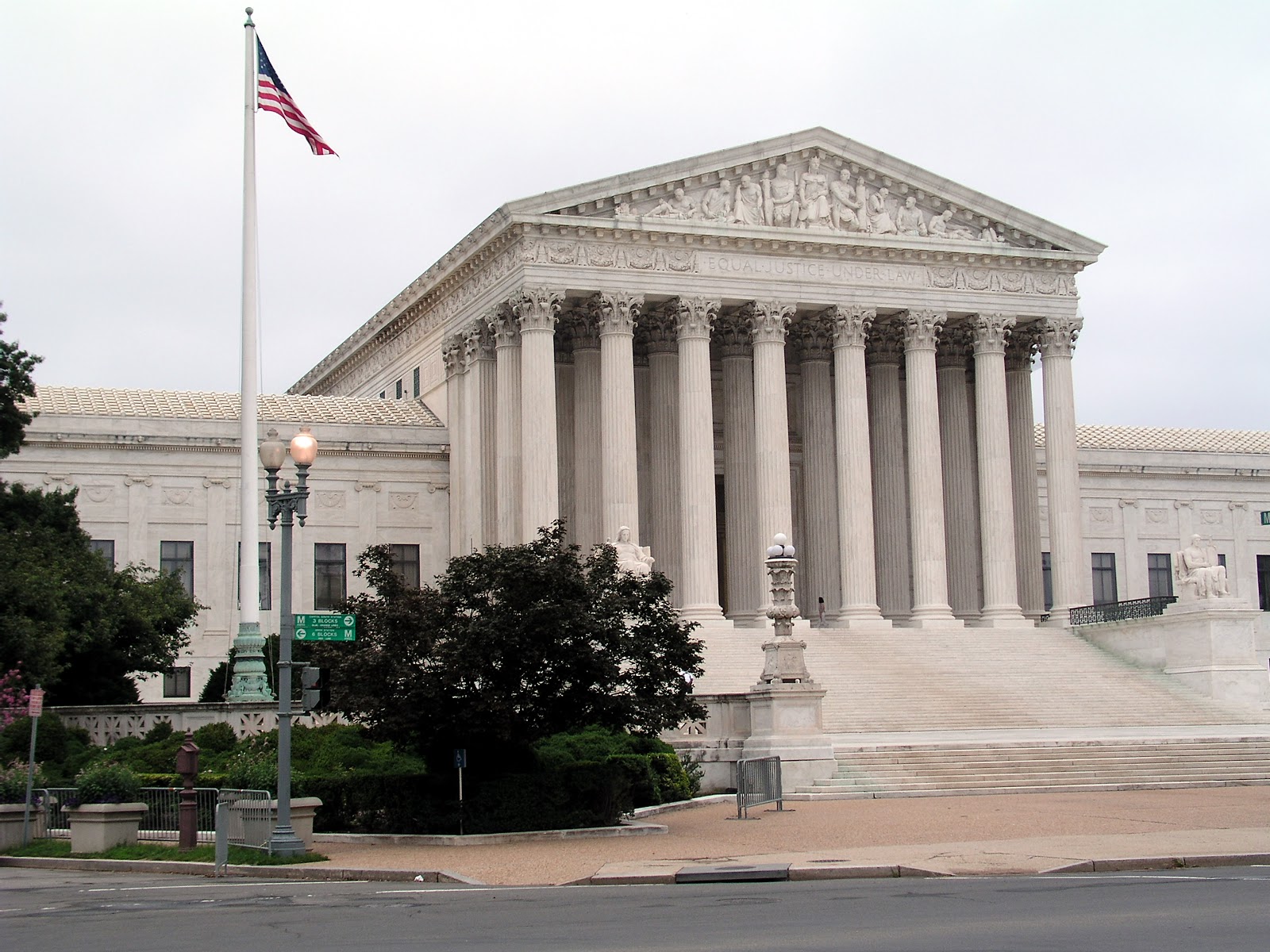
ObamaCare Funding Accelerates Despite Supreme Court Case
Saturday, March 3, 2012
The Queen of the Death Spiral: Kathleen Sebelius
Kathleen Sebelius testified in front of the ways and means committee 02/29/2012. What did she say?
“Well again, congressman, what you’re seeing, it wouldn’t have mattered if we had passed the Affordable Care Act or not,” she said. “The private market is in a death spiral.” - Health and Human Services Secretary Kathleen Sebelius, 02/29/2012 (1)
“Later on Tuesday, in an address to the American Cancer Society’s Cancer Action Network, Sebelius discussed the “broken” health insurance system that Obamacare aims to fix.” (2)
Examining Sebelius’s Insurance Credentials
One might want to examine Sebelius’s implicit vast experience in the field of insurance to determine what credentials she has for making such a notional assertion. How about those insurance credentials?
Abridged Secretary Biography [directly from the H.H.S web site]
“Kathleen Sebelius was sworn in as the 21st Secretary of the Department of Health and Human Services (HHS) on April 28, 2009. Since taking office, Secretary Sebelius has led ambitious efforts to improve America’s health and enhance the delivery of human services to some of the nation’s most vulnerable populations, including young children, those with disabilities, and the elderly.
As part of the historic Affordable Care Act, she is implementing reforms that have ended many of the insurance industry’s worst abuses and will help 34 million uninsured Americans get health coverage. She is also working with doctors, nurses, hospital leaders, employers, and patients to slow the growth in health care costs through better care and better health.
Under Secretary Sebelius’s leadership, HHS is committed to innovation, from promoting public- private collaboration to bring life-saving medicines to market, to building a 21st century food safety system that prevents outbreaks before they occur, to collaborating with the Department of Education, to help states increase the quality of early childhood education programs, and give parents more information to make the best choices for their children.
Secretary Sebelius served as Governor of Kansas from 2003 until her Cabinet appointment in April, 2009, and was named one of America’s Top Five Governors by Time Magazine.” (3)
Hmmm. No insurance experience. Lets drill down deeper:
‘Sebelius was born and raised in a Roman Catholic family in Cincinnati, Ohio. She attended the Summit Country Day School in Cincinnati and graduated from Trinity Washington University in Washington, D.C. with a B.A. in political science. She later earned a Master of Public Administration degree from the University of Kansas. She moved to Kansas in 1974, where she served for eight years as a representative in the Kansas Legislature and eight years as Insurance Commissioner before being elected governor.
Sebelius is the daughter of former Democratic Ohio Governor John J. Gilligan, and thus they became the first father/daughter governor pair in the United States after her election.[3] Following passage of the Health Care and Education Reconciliation Act of 2010, she pointed out another father-daughter connection: her father had been in the House of Representatives when Medicare was originally passed in 1965.” (4)
Hmmm x 2. No private insurance industry experience but a life long politico complete with a political science degree and a masters in public administration. And that insurance commissioner position? Its an elected position. More succinctly: "Sebelius served as executive director and chief lobbyist for the Kansas Trial Lawyers Association (now Kansas Association for Justice) from 1977–1986. She was first elected to the Kansas House of Representatives in 1986. In 1994 she left the House to run for state Insurance Commissioner". And the responsibilities of the elected insurance commissioner position in the state of Kansas? "Regulate and review companies, educate consumers, assist consumers and license agents". We are not talking actuary science, we are talking bureaucrat position. Born and trained politico, with little or no private industry insurance experience. Go figure!(5) (6)
Hence we have the political science major making notional propositions about private insurance, a field of study that she has not experienced. Her vast private insurance industry experience boils down to quasi-experience as an elected position, that of insurance commissioner of the state of Kansas, which was the role of politico-bureaucrat regulator.
Returning to Ms. Sebelius’s notional proposition of the private market for health insurance is a “death spiral”
Upon further review, one might want to take Ms. Sebelius’s notional proposition of a “death spiral” regarding private health insurance and agree with her proposition. Yes, for a moment let us agree with the queen of the death spiral.
Examining the proposition one has to first realize that “insurance”, and the cost thereof, is merely a reflection of what particular underlying risk is insured. That is, say one insures private commercial vehicles, the related characteristics of commercial vehicles, frequency and severity of claims regarding commercial vehicles, operator characteristics, cost of administration, area the vehicle operates, etc. yield a cost to insure. Stated alternatively, the cost of insurance is merely a reflection of the cost to insure the underlying risk. However, the underlying risk is by no means insurance and insurance is conversely not the underlying risk. This is, one must never assume the underlying risk is insurance as the two are related but by no means the same phenomena. Insurance is merely a transfer of pure risk for a consideration [premium]. The pure risk on the other hand is the pure risk. The pure risk may or may not be insurable.
Therefore, if Ms. Sibelius notional proposition is deemed as being fact, which it is not, then that means the insurance is a “death spiral” meaning the underlying risk has characteristics of “death spiral”. That is, the pure risk in and of itself is un-insurable [death spiral]. Consequently, the availability of insurance and the cost to insure the underlying risk if in death spiral mode means the pure risk itself is in a “death spiral mode”.
Hence, unbeknownst to Ms. Sebelius she is asserting the underlying risk, which is health-care, is in a death spiral. Therefore, restating Ms. Sebelius’s notional proposition: “The private health-care delivery system is in a death spiral.” Its not the “insurance” its really the “risk”. Ah, the evil of it all!
Sebelius and her ‘….“broken” health insurance system that Obamacare aims to fix.” ‘
Later in the same day Sebelius makes a separate assertion regarding fixing a private insurance system with a public or collective action system. That it’s the insurance that needs fixed and merely moving the insurance from private to public will fix the “insurance”. That is, social insurance such as Medicare, Medicaid, and Social Security “fix” problems in the realm of insurance. That is, Sebelius is engaging in political dupery. There is grand evidence that social insurance supplanting private legal reserve insurance results in disaster.
Stepping back for a moment, we know that insurance is merely a reflection of the cost of insuring the pure risk. That the pure risk and insurance are related but by no means the same concept. Hence changing the insurance delivery system has little to do with the underlying risk. Be it private delivery health insurance or a scheme such as ObamaCare neither is changing the underlying pure risk in any significant fashion. That is, Sebelius is engaging in nitwitery.
Summary and Implication
The insurance mechanism is related to the pure risk. However, insurance and pure risk are separate concepts. Purposefully confusing risk and insurance, as being one in the same, is Sebelius’s attempt to put forth the concept of: political dupery, under political nitwitery, and in government mysticism we trust.
The underlying risk which is health-care is the concept that needs examined. Changing insurance model/delivery system will not change the pure risk or the health-care delivery system in any meaningful fashion.
Likely Sebelius, political notional-ist at large, implicitly assumes price fixing schemes aka ObamaCare will “fix” the underlying risk. Unfortunately, not one single price fixing scheme in all of recorded economic history has succeeded.
Notes:
(1) Obama Cabinet Secretary: 'The Private Market is in a Death Spiral', CNSNews.com, 02/29/2012
http://cnsnews.com/news/article/obama-cabinet-secretary-private-market-death-spiral
(2) Ibid.
(3) HHS.gov
http://www.hhs.gov/secretary/about/biography/abridged.html
(4) Kansas Insurance Commissioner, http://en.wikipedia.org/wiki/Kansas_Insurance_Commissioner
(5) Kathleen Sebelius, Wikipedia, Early life and family.
http://en.wikipedia.org/wiki/Kathleen_Sebelius
(6) Ibid.
Monday, June 20, 2011
Kansas Congressman Tim Huelskamp's letter to Secretary Sebelius regarding ObamaCare Waiver Process

Link to full article and letter appears below:
http://huelskamp.house.gov/index.php?option=com_content&view=article&id=3368:huelskamp-calls-on-secretary-sebelius-to-let-the-sun-shine-on-waiver-process&catid=48:2011-press-releases
Friday, May 27, 2011
Citizens Against Government Waste Names Sebelius Porker of the Month: ObamaCare Waiver for AARP

Link to full story: http://www.cagw.org/newsroom/porker-of-the-month/
Thursday, March 3, 2011
Friday, January 21, 2011
ObamaCare: got waiver?

Need a waiver to escape ObamaCare?
Over 220 ObamaCare waivers to unions, corporations, and non-profits have been granted by the Department of Health and Human Services (HHS) as of 12/03/2010. The HHS Secretary is Kathleen Sebelius.
The complete list of waivers as of 12/03/2010 can be found at the link below:
http://www.hhs.gov/ociio/regulations/approved_applications_for_waiver.html
Thursday, January 6, 2011
ObamaCare:HHS Secretary Kathleen Sebelius vs. McCarran-Ferguson Act

"Then, on Dec. 21, Ms. Sebelius announced that insurance companies seeking rate increases of 10% or more in the individual or small group market must publicly justify the hikes under standards set by her department.
Insurance regulation has traditionally been a state responsibility, and 43 states must already approve proposed insurance-rate increases. ObamaCare does not authorize HHS to deny rate increases, but the agency said that if a state "lacks the resources or authority" to conduct the kind of review the agency wants, it will conduct its own." - Karl Rove 01/06/2010 (1)
Rove makes a grand point. Sebelius has decided to have the gun fight at the OK corral with health insurers. Only problem is, the OK corral is owned by brothers Pat and Homer.
The McCarran-Ferguson Act is a federal law that was enacted on 03/09/1945. The act had the co-sponsors of democrat Pat McCarran of Nevada and republican Homer Ferguson of Michigan. (2) (3) (4)
The law gives insurers a very narrow exemption to anti trust laws. It allows "the business of insurance" to share loss data, jointly develop insurance forms and allows for the standardization of policy language. It more importantly allows states to regulate and tax insurance. (5) (6) (7)
Moreover, the "business of insurance" is otherwise subject to all other aspects of federal anti-trust. (8) (9) The business of insurance is subject to state level anti trust laws as well. (10)
Notes:
(1)http://online.wsj.com/article/SB10001424052748704405704576063892468779556.html?mod=WSJ_Opinion_LEADTop
(2) http://www.naifa.org/advocasy/irr/mf.cfm
(3) http://www.ohioinsurance.org/factbook2001/chapter6/chapter_6k.htm
(4) http://en.wikipedia.org/wiki/McCarran%E2%80%93Ferguson_Act
(5)http://www.ohioinsurance.org/factbook2001/chapter6/chapter_6k.htm
(6) http://www.bradenton.com/business/story/2047936.html
(7) http://www.pianet.org/IssuesOfFocus/HotIssues/modernization/2-12-10-2.htm
(8) http://www.pciaa.net/web/sitehome.nsf/lcpublic/210?opendocument
(9) http://www.answers.com/topic/mccarran-ferguson-act-of-1945-1
(10) http://www.namic.org/fedkey/07mfa.asp
Thursday, December 23, 2010
ObamaCare: no going back?
 On December 21st Health and Human Services Secretary Kathleen Sebelius held a special news conference as an acclamation of ObamaCare. She concluded the news conference by stating "I think its important folks understand there is no going back". (1)
The "no going back" statement by Sebelius was an attack on the movement to repeal or de-fund ObamaCare.
However Sebelius missed the larger picture that first stage ObamaCare de-funding had already occurred and a showdown is in the offing for March 2011. That "no going back" had already been replaced with "going back".
What Sebelius failed to mention was the omnibus spending bill that perished in the Senate and was replaced with a continuing resolution also negated the first phase of ObamaCare funding. That is, ObamaCare requires $115 billion dollars to fund the expansion of regulators. This $115 billion expansion of departments such as Sebelius's Health and Human Services is a cost in addition to the reported $1 trillion dollar price tag for ObamaCare . The omnibus spending bill authorized the first $1 billion for the expansion of regulators. That $1 billion was never authorized as it ended with the omnibus spending bill.
Hence the continuing resolution that took the place of the omnibus spending bill precluded the $1 billion regulator expansion down payment. However, the continuing resolution expires in March 2011 and sets the stage for a showdown regarding the initial phase of funding for the $115 billion dollar expansion of regulators to administer ObamaCare.
(1) Wall Street Journal Political Diary, 12/22/2010, Joesph Rago.
Wednesday, November 10, 2010
ObamaCare: purposely designed to end as a single payer plan?
 Many commentators make a general argument that ObamaCare was purposely designed to end as a single payer plan. However the same commentators hop scotch over the concept of private insurance vs. social insurance reserves which needs examined as a component of the assertion that ObamaCare was purposely designed to end as a single payer plan .
That is to say, beyond the myriad of arguments against ObamaCare including the demise of consumer directed health plans, price fixing resulting in quantitative and qualitative reductions in service, a centrally planned market for health care through massive and expensive bureaucracy replacing price coordination in a decentralized economy, one point that gets little press time is the difference between private insurance and social insurance reserves.
What are insurance company reserves?
A simple definition is: "consumers make insurance claims in the future and depend on insurers to honor their earlier commitments. Reserves—the financial assets in which insurers invest their premium income—are often the most tangible sign of an insurance firm's staying power". (1)
A more complex definition is: "amount designated as a future liability for life or health insurance to meet the difference between future benefits and future premiums. net level premium is determined so that this basic relationship holds: the present value of a future premium equals the present value of a future benefit. This relationship, incidentally, exists in fact only at the point of issuance of a life insurance policy. After that, the value of future premiums is less than the value of future benefits because fewer premiums are left to be paid. Thus, a reserve must be maintained at all times to make up this difference". (2)
An alternate definition is: "[means amounts—] which are set aside to mature or liquidate, either by payment or reinsurance, future unaccrued claims arising from life insurance, annuity, and noncancellable accident and health insurance contracts (including life insurance or annuity contracts combined with noncancellable accident and health insurance) involving, at the time with respect to which the reserve is computed, life, accident, or health contingencies". (3)
The concept of "preexisting conditions" has become a hot political topic that is used in debate with much verbal virtuosity. However, preexisting conditions is actually a term that describes a condition of a risk uncovered through "underwriting". In private insurance, which is reserved to pay for future claims, underwriting directly effects reserves and ultimately pricing. The key in private insurance is "a reserved plan to pay future claims" which is achieved in part through underwriting.
On the other hand, social insurance programs are notorious for reserving for future claim paying ability through the taxation authority of a central government. That is, future claim paying ability shows up as future unfunded entitlements that are "reserved" through the ability of the central government to raise taxes to fund the unfunded future claims paying ability.
Reserves vs. Taxes
Social insurance can remove/reduce underwriting allowing for preexisting conditions as social insurance does not reserve their ability to pay future claims. If social insurance was required to reserve future claim paying ability, then suddenly underwriting and preexisting conditions would immediately be placed back on the table and permanently placed back on the table. Therefore, underwriting which uncovers conditions of a risk known as preexisting conditions can/are removed in social insurance as "tax" is the reserve.
The end game is by removing underwriting in social insurance, in effect, guarantees future tax increases as the reserve must increase to accommodate anti-selection due to the removal of underwriting. Anti-selection leads to adverse claim experience hence causing additional reserve needs to expand exponentially.
Private Insurers Reserves and Price Increases
Once you go through the above reserve comparison exercise regarding private insurance vs. social insurance, then you can proceed to the argument regarding ObamaCare being purposely designed to end as single payer plan. A major reason ObamaCare ends as a single payer plan through design is because private insurance can not possibly reserve to pay for future claims when underwriting is eliminated. Private insurance can raise prices in the short run but as they eventually see insolvency on the horizon due to reserve problems they merely exit and end operations.
Note: private insurers, even in the short run, will have difficulty raising premiums at a rate needed to increase reserves as ObamaCare is a price fixing scheme in regards to insurance premiums as well as health-care services. Any price increase by insurers are immediately met with angry inquiries such as those by Kathleen Sebelius of the H.H.S. . (4)
Meanwhile, while private insurers reserves become inadequate and private insurers exit, the exiting private insurance administration is dismantled. However, existing private insurance administration could be utilized as an administration source for ObamaCare. The organization and expertise already exists. But ObamaCare authorizes its own massive bureaucracy built from the ground up with little expertise hence the existing private insurance administration ends. Note that in the short run you have duel administration of exiting private insurers and ObamaCare bureaucracy which is an additional cost driver.
Summary
The single payer end game, a government administered plan, is in essence a non-reserved entitlement where "tax" is the reserve. Hence "tax" must increase as you have elected not to reserve to pay for future claims paying ability in a social insurance plan. Taxes will increase as anti-selection increases claims, due in part to the removal of underwriting, which means future claims paying ability must be further reserved. You either reserve or you tax. In social insurance you tax.
Notes
(1) Federal Reserve Bank of Minneapolis http://www.minneapolisfed.org/publications_papers/pub_display.cfm?id=3605
(2)http://www.allbusiness.com/glossaries/life-insurance-reserves/4948746-1.html
(3)Cornell University Law School http://www.law.cornell.edu/uscode/26/usc_sec_26_00000816----000-.html
(4) Sebelius Has a List, Wall Street Journal http://online.wsj.com/article/SB10001424052748703597204575483900330728436.html